The Hidden Risks of Feline Contraceptive Vaccines
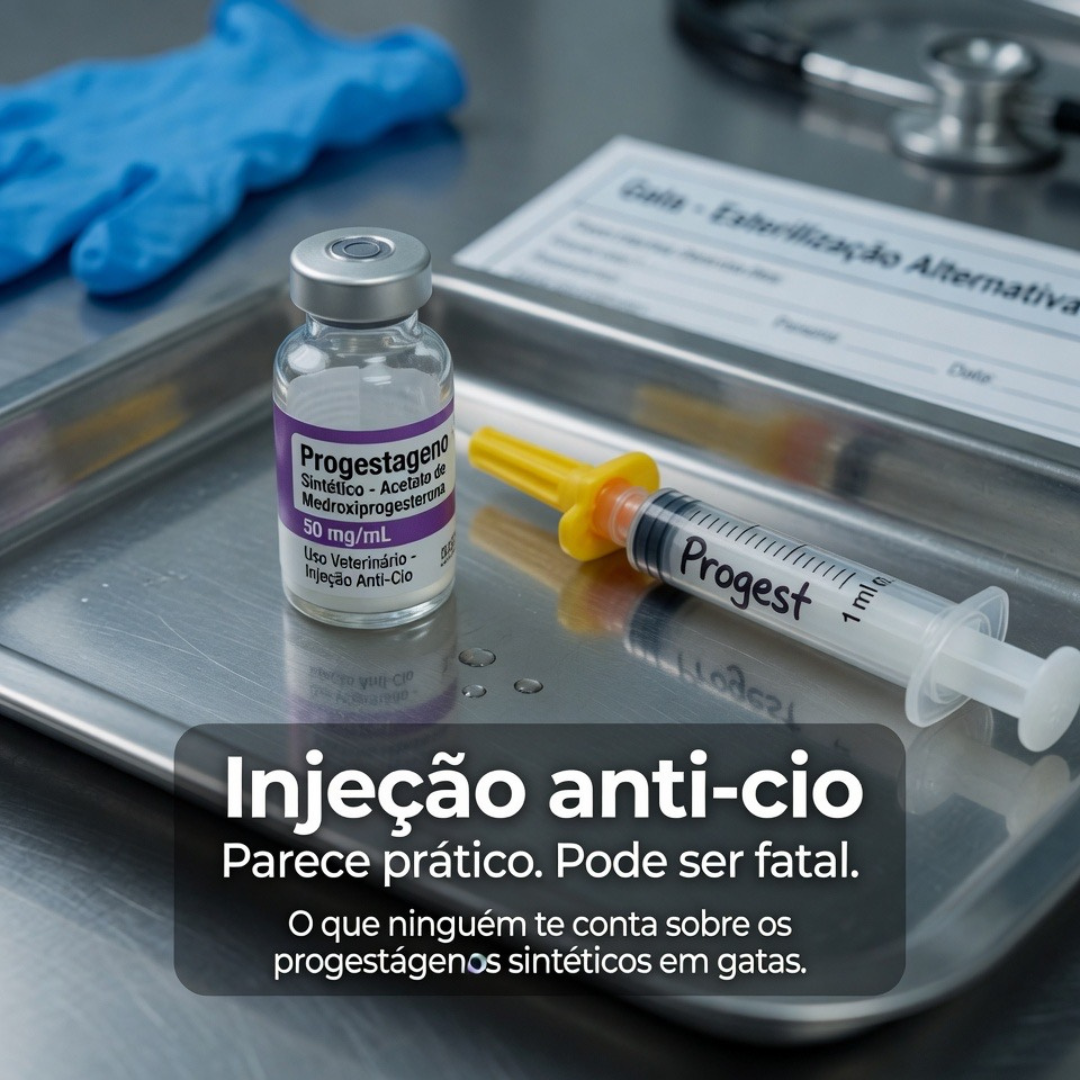
Many cat owners — especially those with breeding queens — want to delay or avoid spaying without stopping reproduction entirely. The appeal is understandable: a pill, a shot, or a vaccine that keeps the cat from getting pregnant without any surgery. But the science behind feline hormonal contraception tells a far more complicated story, one that every cat owner deserves to know.
Two Very Different Approaches
When people talk about "contraceptive vaccines" for cats, they're usually referring to one of two distinct technologies: progestin-based hormonal treatments (injections or pills using synthetic progesterone) and immunocontraceptive vaccines (which train the immune system to suppress reproductive hormones). These are not interchangeable, and their risk profiles differ significantly.
Progestins: The Older, Riskier Route
Synthetic progestins such as medroxyprogesterone acetate (MPA) and megestrol acetate (MA) have been used in cats for over fifty years. Sold under names like Depo-Provera (for humans, sometimes applied off-label in veterinary medicine) or Perlutex, these drugs suppress estrus by blocking the hypothalamic release of GnRH — the master hormone that drives the reproductive cycle.
On paper, this seems elegant. In practice, the literature is dominated by case reports of serious adverse effects, particularly when high doses or long-term regimens are used. According to a comprehensive review published in Journal of Feline Medicine and Surgery, the side effect profile of progestins in cats is dose-dependent and includes:
- Cystic endometrial hyperplasia (CEH) and pyometra
- Mammary gland hyperplasia and mammary carcinoma
- Ovarian cysts
- Adrenocortical suppression
- Acromegaly (excess growth hormone secretion)
- Diabetes mellitus
- Polydipsia and polyphagia
One long-term study found that mammary nodules and vaginal discharge or pyometra appeared in 11% of cats treated for 6 years, rising to 38% after 8 years and 25% after 10 years. These are not rare anecdotes; they are documented, cumulative consequences of sustained progestin exposure.
Even more striking: progestin-induced mammary carcinoma has been reported in male cats treated with MPA for behavioral reasons such as inter-cat aggression. A 2024 case report described an 11-year-old male cat with multiple mammary tumors and nodal metastases following years of MPA injections — a sobering reminder that hormonal contraception affects the whole body, not just the uterus.
The Pyometra Problem
Of all the risks associated with progestin use, pyometra is the most immediately life-threatening. Pyometra is a bacterial infection of the uterus in which pus accumulates within the uterine lumen. It is not a coincidence that progestins dramatically increase the risk of this condition: progesterone primes the endometrium (the uterine lining) to become thickened and glandular — ideal conditions for bacterial proliferation. The cycle is well established: exogenous progestin → endometrial hyperplasia → bacterial invasion → pyometra.
Pyometra in cats presents in two forms. In open pyometra, the cervix remains open and purulent discharge is visible — an alarming sign but one that actually speeds up diagnosis. In closed pyometra, the cervix seals the infection inside, and the cat deteriorates rapidly without any obvious external sign. Left untreated, both forms lead to sepsis, renal failure, and death.
The standard treatment is emergency ovariohysterectomy (OHE) — surgical removal of the uterus and ovaries. While the overall survival rate when treated promptly is high (studies in specialized settings suggest survival to discharge between 97–100%), the critical word is promptly. Cats presenting with uterine rupture — a direct complication of advanced pyometra — face a mortality rate of approximately 57%. Roughly 20% of pyometra patients develop complications, most commonly peritonitis.
The surgery itself is considerably more complex than a routine spay. The infected uterus is often friable (prone to tearing), the cat may be severely dehydrated and septic, and anesthetic risk is heightened. Pre-surgical stabilization typically requires IV fluids, pain management, and antibiotics, followed by several days of hospitalization. Emergency surgical costs can easily exceed USD 2,000 in urban veterinary settings.
Immunocontraceptive Vaccines: Promising, but Not Yet Ready
A newer category of contraceptive technology uses immunology rather than exogenous hormones. The most studied candidate is GonaCon™, a GnRH–hemocyanin conjugate vaccine developed by the USDA National Wildlife Research Center. By inducing the immune system to produce antibodies against GnRH — the hypothalamic hormone that triggers the entire reproductive cascade — GonaCon effectively suppresses fertility in both sexes without introducing synthetic steroids.
Early trials were genuinely promising. A single dose of an early GonaCon formulation produced a median contraceptive effect of over 39.7 months in female cats — more than three years. For male cats, the duration was shorter and less predictable, with a median effect of around 14 months.
However, immunocontraceptive vaccines still face significant limitations:
- Not yet commercially approved for companion cats in most countries, including Brazil.
- Variable immune response: not all cats mount sufficient antibody titers, and there is no reliable way to predict individual response without testing.
- Duration is unpredictable: some cats lose contraceptive protection sooner than expected, with no reliable external signal that protection has waned.
- Injection site reactions: in dogs, an earlier GnRH vaccine caused unacceptable adverse reactions at the injection site. Feline data is more limited.
- Sex hormone suppression: since GnRH controls estrogen and testosterone, long-term effects of chronic hormone suppression on bone density, coat quality, and behavior have not been fully characterized in cats.
- Sedation often required: unlike routine vaccines, GnRH immunocontraceptives typically require sedation for proper subcutaneous administration, adding procedural risk and cost.
The zona pellucida (ZP) antigen — another immunocontraceptive target used successfully in several wildlife species — has shown consistently poor results in domestic cats and is not considered a viable feline option at this stage.
Why Spaying Remains the Gold Standard
It is worth stepping back to ask a fundamental question: why avoid spaying in the first place? For breeding cats with documented pedigree value, delaying spaying is a legitimate veterinary decision made with a qualified professional. For the vast majority of companion cats, however, elective ovariohysterectomy performed before the first heat cycle (or shortly after) carries the best overall risk profile:
- Eliminates pyometra risk entirely
- Dramatically reduces mammary tumor incidence (spaying before the first heat reduces risk by approximately 91%)
- Prevents uterine and ovarian cancers
- Avoids the cumulative endocrine disruption of repeated heat cycles
- One-time surgical procedure with rapid recovery in young, healthy cats
The perception that spaying is more dangerous than hormonal contraception is almost always inverted. A routine spay in a healthy young queen is one of the most commonly performed veterinary procedures, with complication rates well below those associated with long-term progestin use or emergency pyometra surgery.
What to Do if Your Cat Has Already Received Progestins
If your cat has received progestin injections or pills — even once — inform your veterinarian at every subsequent visit. Schedule a gynecological ultrasound to evaluate the uterus and mammary glands. Signs that warrant immediate veterinary evaluation include: increased thirst and urination, lethargy, loss of appetite, vomiting, abdominal distension, and any vaginal discharge in an intact queen. These may indicate developing CEH, early pyometra, or endocrine disruption secondary to progestin exposure.
Do not attempt to manage reproductive control in cats with over-the-counter products, hormones intended for humans, or internet-sourced protocols. The interaction between dose, cycle phase, pre-existing uterine health, and individual hormonal sensitivity makes progestin use in cats a genuinely complex clinical decision — one that should only be made by a veterinarian familiar with the complete risk literature.
The Bottom Line
Feline contraceptive vaccines occupy a spectrum from the genuinely dangerous (high-dose progestins in intact queens) to the genuinely experimental (immunocontraceptive GnRH vaccines awaiting commercial approval). For pet owners who want to protect their cat's long-term health, the science currently points in one direction: early spaying, performed by a qualified veterinary surgeon, eliminates the entire category of risk described in this article. If breeding is the goal, work closely with a reproductive specialist and never use hormonal contraception without a full discussion of your individual cat's risk profile.
References
- Romagnoli S. Progestins to control feline reproduction: Historical abuse of high doses and potentially safe use of low doses. J Feline Med Surg. 2015;17(9):743–752. PMC11148977.
- Benka VA, Levy JK. Vaccines for feline contraception: GonaCon GnRH-hemocyanin conjugate immunocontraceptive. J Feline Med Surg. 2015;17(9):758–765.
- Levy JK et al. Contraceptive vaccines for the humane control of community cat populations. Am J Reprod Immunol. 2011;66(1):63–70. PMC5567843.
- Balogh O et al. Comprehensive Evaluation and Future Perspectives of Non-Surgical Contraceptive Methods in Female Cats and Dogs. Animals (Basel). 2025;15(10):1501. PMC12108206.
- Ferré-Dolcet L et al. Immunocontraception of male domestic cats using GnRH vaccine Improvac. Theriogenology. 2023;199:74–82.
- Kowalewski MP et al. LPS-Challenged TNFα Production and TNFα/TNFRs Expression in the Endometrium of Cats with Pyometra or Receiving Medroxyprogesterone Acetate. Theriogenology. 2015. PMC4083830.
- Saba CF et al. Mammary adenocarcinomas in three male cats exposed to medroxyprogesterone acetate. J Feline Med Surg. 2007. PMC10911437.
- Patterson EE et al. Findings and prognostic indicators of outcomes for queens with pyometra treated surgically in a nonspecialized hospital setting. JAVMA. 2022;260(S2).
- EveryCat Health Foundation. Understanding Pyometra: Part II. Diagnosis, Treatment and Prognosis. 2021.
- American College of Veterinary Surgeons (ACVS). Pyometra. acvs.org.
- VCA Animal Hospitals. Pyometra in Cats. vcahospitals.com.