Freesia
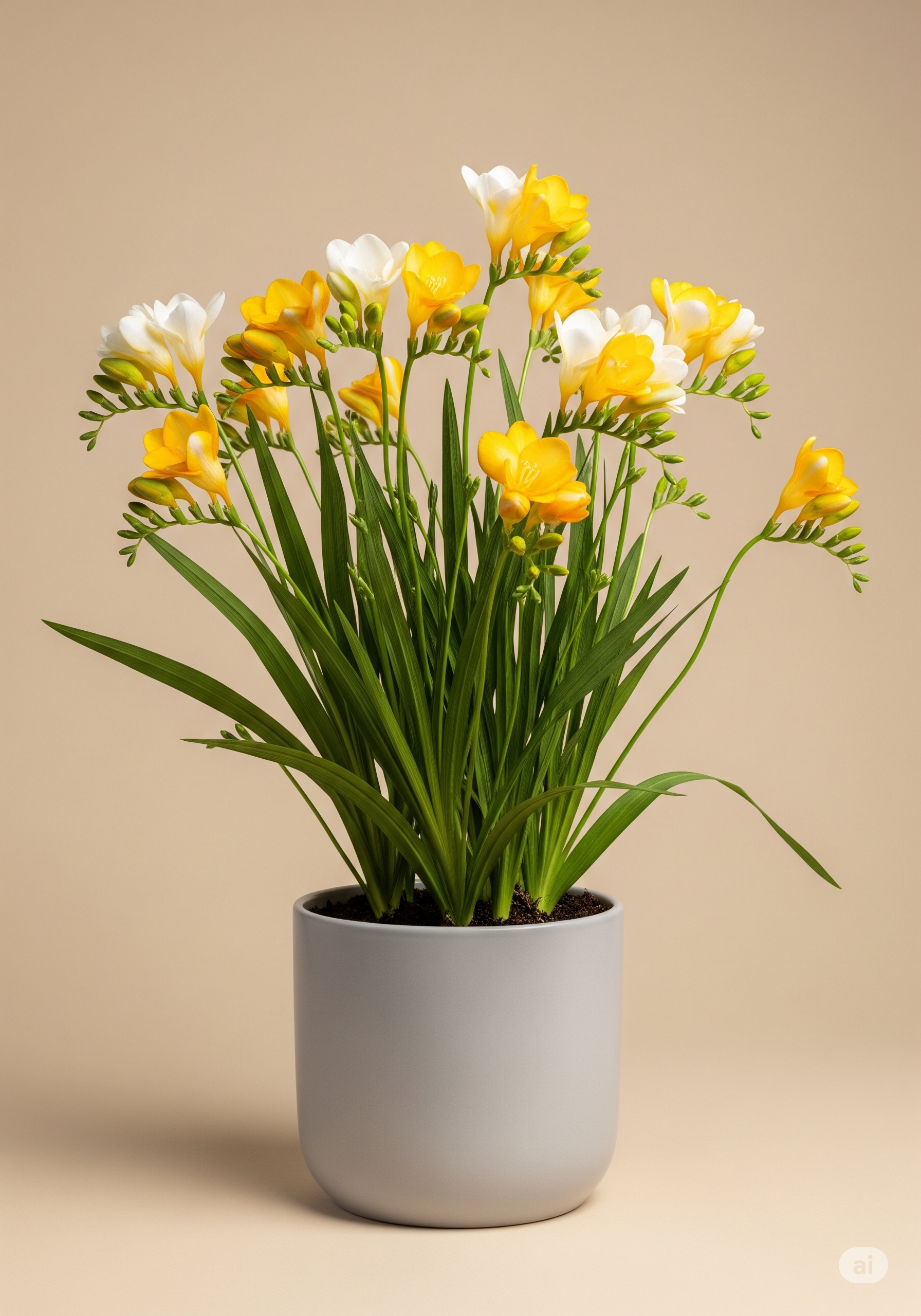
Scientific name: Freesia spp.
☘️ Toxicity: Safe for cats
☀️ Ideal light: Full sun or very bright indirect light
💧 Watering: Moderate; keep soil slightly moist and well-drained
The Freesia is a bulbous plant valued for its elegant, fragrant blooms that come in vibrant shades of yellow, pink, white, and lilac. Native to South Africa, it’s a cat-safe flower commonly used in gardens and floral arrangements for its sweet, lasting scent.
Essential care
- Light: Prefers full sun or bright indirect light.
- Water: Keep soil lightly moist; avoid overwatering as bulbs are sensitive to excess moisture.
- Soil: Fertile, well-draining soil rich in organic matter.
- Environment: Prefers cool, well-ventilated spaces — ideal for sunny balconies.
- Fertilization: Monthly during growth and bloom with a balanced fertilizer (NPK 10-10-10).
- Pruning: Remove spent flowers and dry leaves to prevent fungal growth.
Flowering
- Season: Late winter to early spring.
- Duration: Each stem blooms for about 2–3 weeks.
- Tip: After flowering, gradually reduce watering and allow leaves to dry naturally to strengthen the bulbs for the next cycle.
Pests and how to handle them
- Aphids and thrips: Remove manually or use neem oil spray.
- Fungi: Avoid watering at night and ensure good soil drainage.
Propagation
- Bulb division: Separate offsets after the dormant period and replant.
- Seeds: Germinate in 3–4 weeks; flowering may occur in 1–2 years.
Cat safety
- Classification: Non-toxic to cats (ASPCA reference).
- Best practice: Prevent cats from digging bulbs to maintain the plant’s health.
💡 Due to its sweet, floral fragrance, Freesia is widely used in high-end perfumery and skincare products.
Quick checklist
- ☀️ Full sun or bright light
- 💧 Slightly moist, well-drained soil
- 🌸 Blooms in late winter
- ✂️ Remove dry leaves
- 🐾 Safe for cats