Poet’s Jasmine
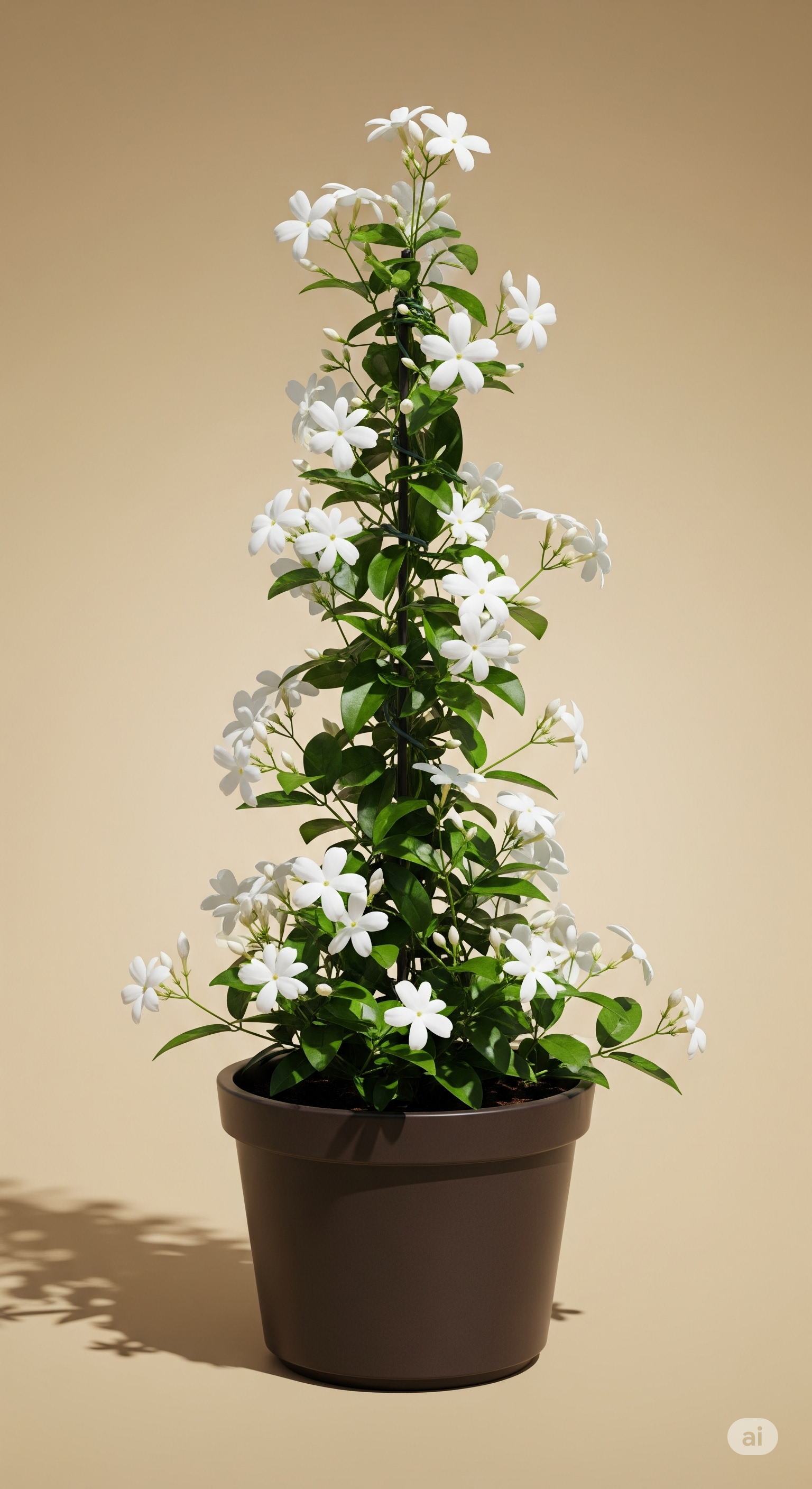
Scientific name: Jasminum officinale
☘️ Toxicity: Safe for cats
☀️ Ideal light: Full sun or bright partial shade
💧 Watering: Moderate; keep soil fresh and well-drained
The Common Jasmine (Jasminum officinale) is a fast-growing climbing vine with delicate, fragrant white flowers. Known for inspiring poets and artists for centuries, this species is non-toxic to cats and perfect for sunny patios, trellises, and balconies.
Essential care
- Light: Full sun for best flowering; tolerates light shade.
- Water: Keep soil slightly moist; reduce watering in winter.
- Soil: Fertile, light, and rich in organic matter.
- Environment: Ideal for warm, well-ventilated areas. Can be grown in pots with a trellis.
- Fertilization: Every two weeks during spring and summer with a balanced fertilizer (NPK 10-10-10).
- Pruning: After flowering to control size and encourage new growth.
Flowering
- Season: Late winter through early summer.
- Fragrance: Sweet and intense, especially in the evening.
- Tip: Cooler winter nights help trigger abundant blooming in spring.
Pests and how to handle them
- Aphids: Remove manually or use neem oil spray.
- Scale insects: Clean with cotton and alcohol or prune affected stems.
- Fungal issues: Improve ventilation and avoid leaf wetness at night.
Propagation
- Cuttings: Use semi-woody stems about 15 cm long; root in moist substrate.
- Layering: An effective alternative for mature plants.
Fragrance and uses
- Fragrance: Rich, romantic, and relaxing — popular in perfumery and aromatherapy.
- Uses: Ideal for scented gardens, window boxes, and pergolas.
Cat safety
- Classification: Non-toxic to cats (ASPCA).
- Best practice: Keep vines well-trained to prevent cats from climbing or chewing excessively.
💡 In ancient Persia, Poet’s Jasmine symbolized purity and love — and today, it still embodies calm and inspiration.
Quick checklist
- ☀️ Full sun or bright partial shade
- 💧 Slightly moist soil
- 🌸 Strong fragrance
- ✂️ Prune after flowering
- 🐾 Safe for cats