Areca Palm
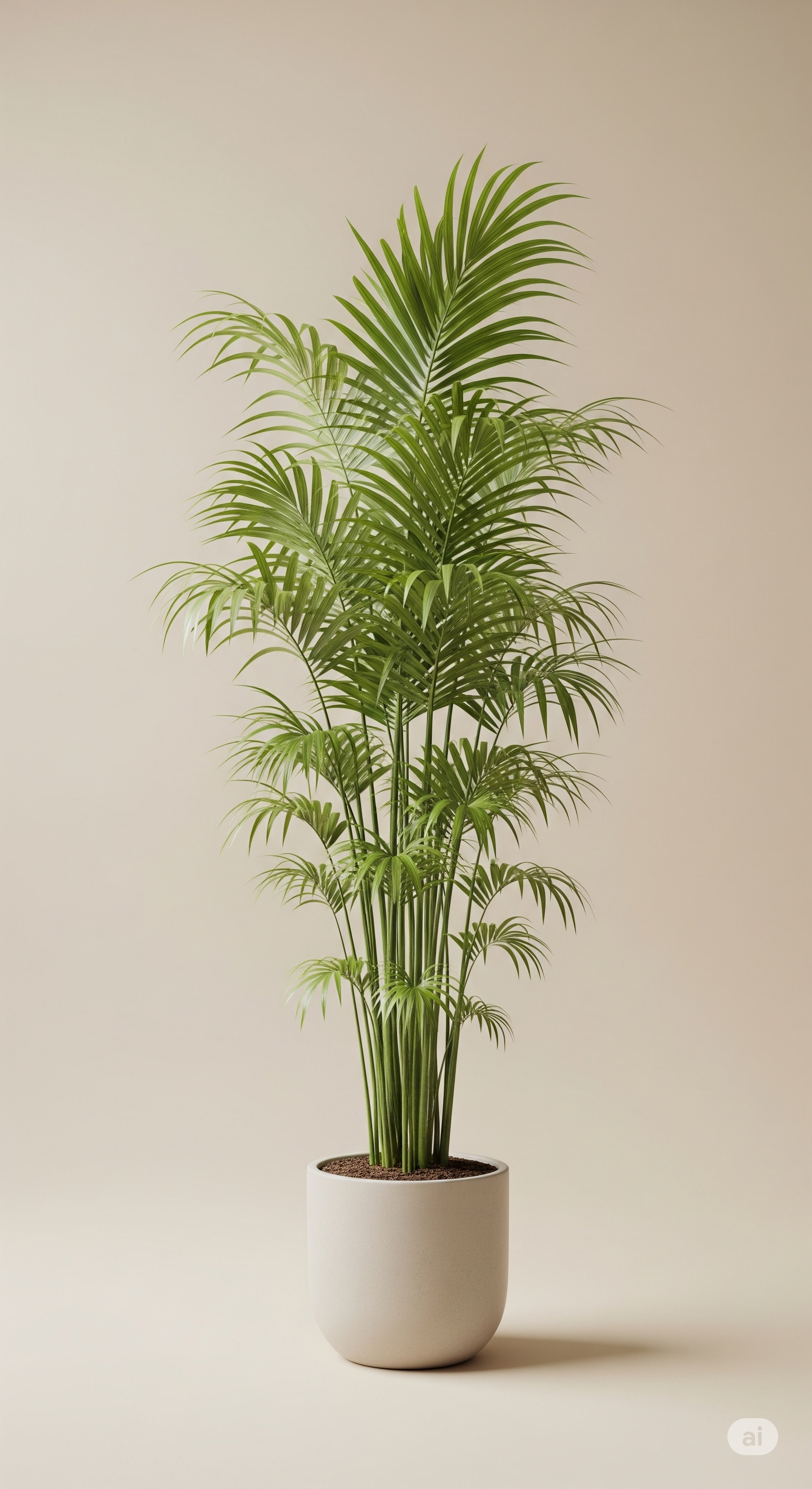
Scientific name: Dypsis lutescens
☘️ Toxicity: Safe for cats
☀️ Ideal light: Bright indirect light
💧 Watering: Moderate; allow the top layer of soil to dry slightly between waterings
The Areca Palm is an elegant tropical plant widely valued as an indoor specimen for its light, exotic appearance. Its arching, feathery fronds bring movement and freshness to any space. It's an excellent choice for those seeking beauty without risk — and it's fully safe for cats.
Essential care
- Light: Prefers bright indirect light; tolerates morning sun but avoid intense direct exposure.
- Water: Water when the top layer of soil feels dry; never let it sit in standing water.
- Humidity: Appreciates moderate to high humidity — mist the fronds or use a pebble tray with water.
- Substrate: Well-draining mix of potting soil, coarse sand, and perlite works well.
- Temperature: Thrives between 18–27 °C (64–81 °F); avoid cold drafts and frost.
Common problems
- Yellow or brown tips: Usually caused by too much direct sun or fluoride/chlorine in tap water.
- Yellow leaves: Overwatering or insufficient drainage.
- Spider mites and scale: Inspect regularly, especially in dry indoor environments.
Propagation
- Division: The main method; separate offshoots during repotting in spring.
- Repotting: Every 2 years into a slightly larger pot to sustain healthy growth.
Cat safety
- Classification: Non-toxic to cats.
- Best practice: Even though safe, discourage frequent chewing to keep the fronds intact.
💡 NASA research lists the Areca Palm among the top houseplants for removing airborne toxins — making it as functional as it is beautiful.
Quick checklist
- ☀️ Bright indirect light
- 💧 Allow soil to dry slightly between waterings
- 🌫️ Moderate to high humidity
- 🌡️ Stable temperature (18–27 °C / 64–81 °F)
- 🐾 Safe for cats