Variegated Swedish Ivy
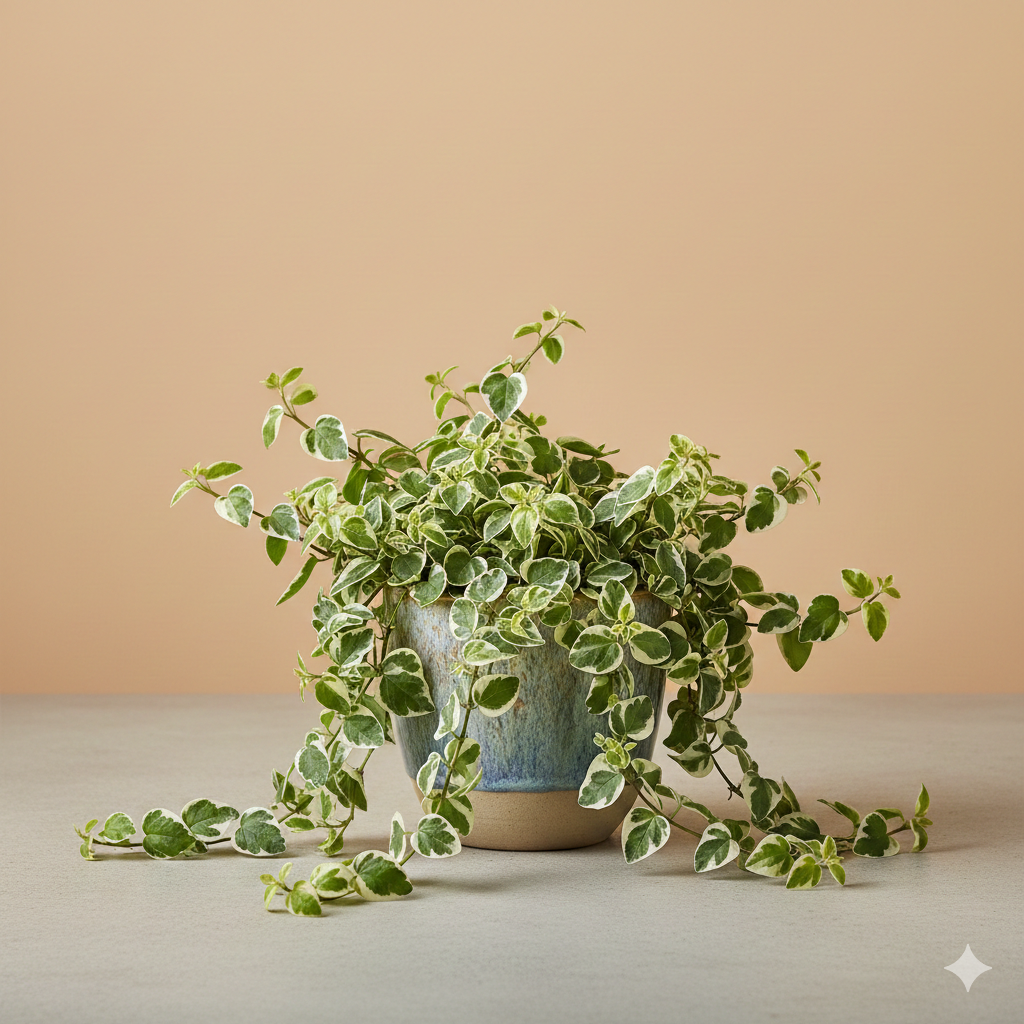
Scientific name: Plectranthus verticillatus ‘Variegata’
Common name: Variegated Swedish ivy
Other names: money plant, creeping charlie (regional)
☘️ Toxicity: Non-toxic to cats
☀️ Ideal light: Very bright indirect light; tolerates partial shade
💧 Watering: Moderate; water when the top 2–3 cm of soil are dry
The variegated Swedish ivy is a fast-growing trailing plant known for its soft, cascading stems and green leaves edged with creamy tones. It is widely used on shelves and hanging planters and adapts well to indoor environments with good light. This plant is considered non-toxic to cats, making it a popular choice for pet-friendly homes.
Essential care
- Light: Prefers very bright indirect light. Good light helps maintain the variegation.
- Water: Keep the soil lightly moist but never soggy. Reduce watering during colder months.
- Substrate: Well-draining, lightweight mix in pots with drainage holes.
- Environment: Thrives indoors with good airflow and mild to warm temperatures.
- Fertilization: Monthly during spring and summer, using a diluted balanced fertilizer.
- Pruning: Pinch tips regularly to encourage fuller, bushier growth.
Pests and how to handle them
- Mealybugs and aphids: Remove manually and apply mild soap if needed.
- Mites: Improve air circulation and slightly increase ambient humidity.
- Root rot: Usually caused by overwatering; adjust watering and drainage.
Propagation
- Cuttings: Extremely easy; stems root quickly in water or directly in moist soil.
Cat safety
- Classification: Non-toxic to cats.
- Best practice: Even though it is non-toxic, discourage frequent chewing to preserve the plant and avoid mild digestive discomfort.
💡 In variegated plants, brighter indirect light helps keep leaf patterns stable and prevents reversion to solid green.
Quick checklist
- ☀️ Bright indirect light
- 🪴 Well-draining soil
- 💧 Moderate watering
- ✂️ Regular pinching or pruning
- 🐾 Non-toxic to cats