Lady Palm
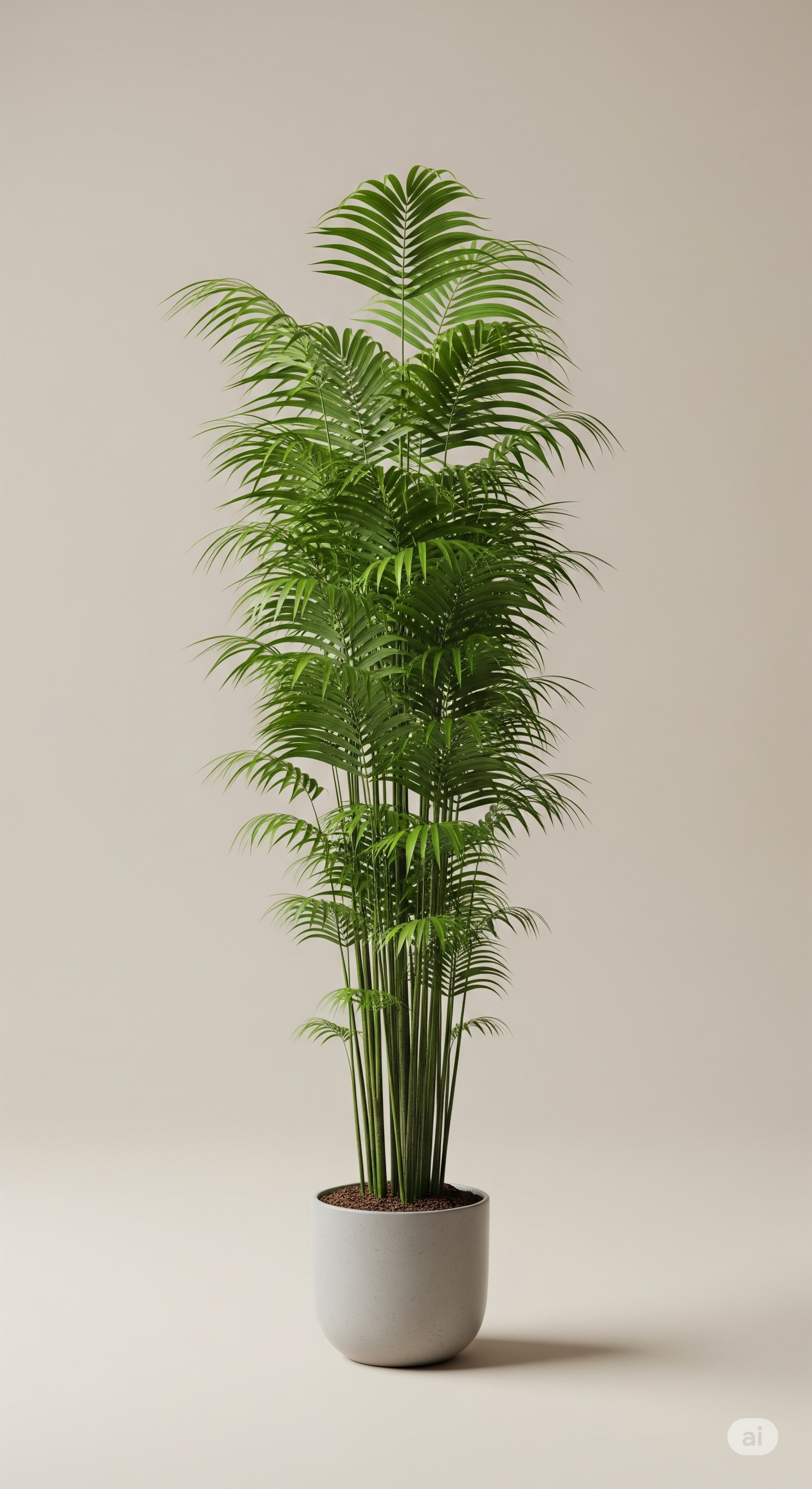
Scientific name: Rhapis excelsa
☘️ Toxicity: Safe for cats
☀️ Ideal light: Partial shade or soft indirect light
💧 Watering: Moderate; allow the top layer of soil to dry slightly between waterings
Elegant in appearance and compact in form, the Lady Palm is a slow-growing palm highly valued as an indoor plant. Its fan-shaped fronds and excellent tolerance for low light make it a sophisticated choice for living rooms, hallways, and offices — and it's fully safe for cats.
Essential care
- Light: Adapts well to partial shade and indirect light; avoid intense direct sun.
- Water: Water when the top layer of soil feels dry; never let it sit in standing water.
- Humidity: Benefits from regular misting and appreciates naturally humid environments.
- Substrate: Well-draining mix of potting soil, coarse sand, and perlite works well.
- Temperature: Thrives between 15–25 °C (59–77 °F); sensitive to frost and cold drafts.
Common problems
- Brown tips: Dry air, excessive sun, or fluoride/chlorine in tap water.
- Yellow leaves: Overwatering or poor drainage.
- Slow growth: A natural trait of this species — not a sign of poor health.
Propagation
- Division: The most common method, done during repotting in spring.
- Repotting: Every 2–3 years; this palm actually prefers slightly snug pots.
Cat safety
- Classification: Non-toxic to cats.
- Best practice: Even though safe, discourage frequent chewing to keep the fronds intact.
💡 The Lady Palm is one of the few palms that thrives in bathrooms with good indirect light — the natural humidity of the space supports its growth.
Quick checklist
- ☀️ Partial shade or soft indirect light
- 💧 Allow soil to dry slightly between waterings
- 🌫️ Moderate to high humidity
- 🌡️ Stable temperature (15–25 °C / 59–77 °F)
- 🐾 Safe for cats