African Violet
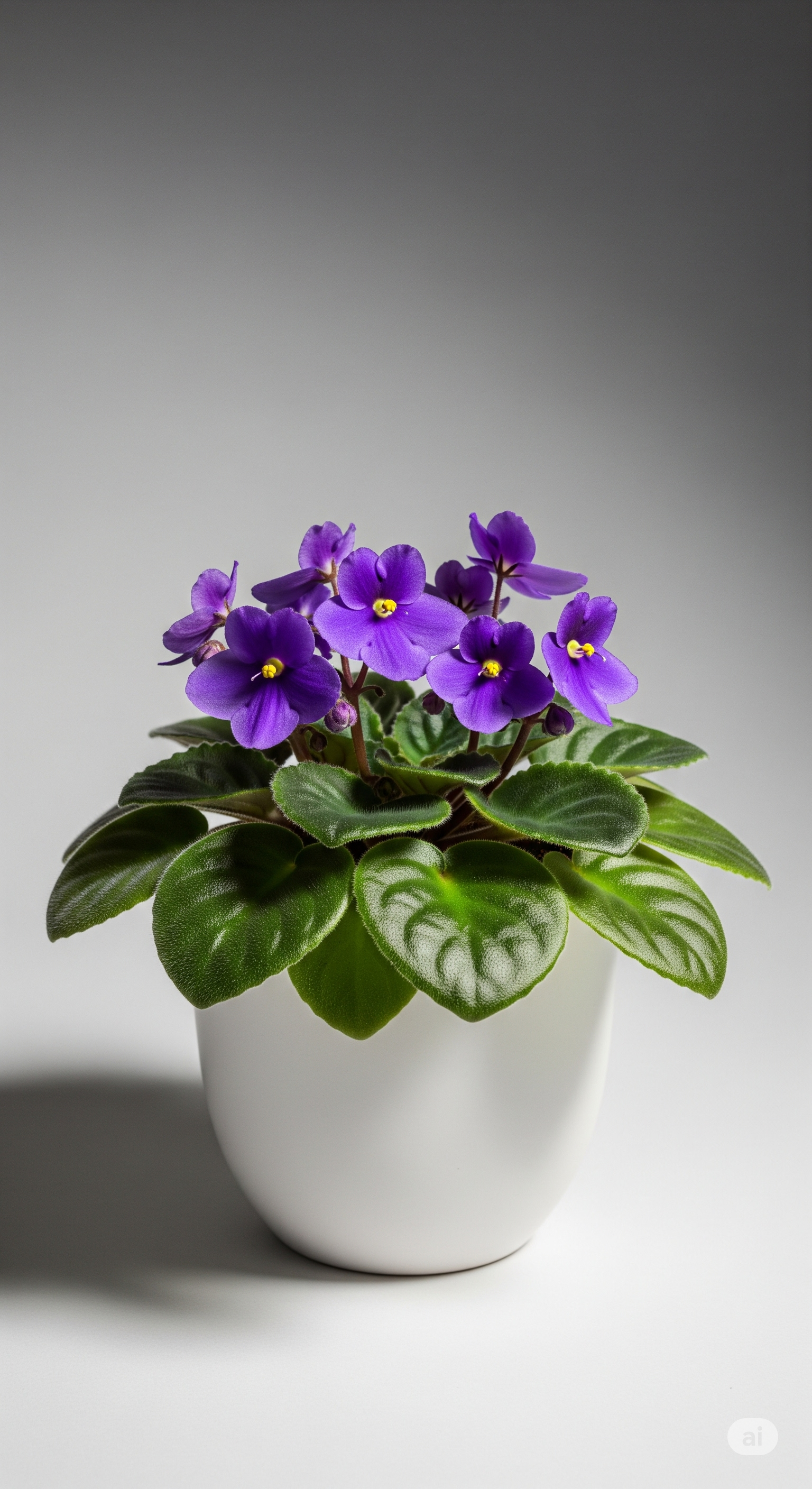
Scientific name: Saintpaulia ionantha
☘️ Toxicity: Non-toxic to cats
☀️ Ideal light: Bright indirect light; avoid direct sunlight
💧 Watering: Moderate; prefer bottom watering (capillarity) to keep leaves dry
Compact, flowering, and safe for feline households, the African Violet thrives in well-lit interiors. With proper light, stable humidity, and gentle feeding, it blooms almost continuously. Its velvety leaves are sensitive to cold water and direct sun — always choose bottom watering and filtered light.
Essential care
- Light: Bright indirect light (east/north-facing windows with a thin curtain). Avoid direct sun on leaves to prevent burn marks.
- Water: Bottom watering — place the pot on a saucer with water for 15–20 minutes, then discard the excess. Let the top layer dry slightly before watering again.
- Substrate: Light, porous, and well-draining (e.g., 40% peat/coconut fiber + 30% perlite/vermiculite + 20% light compost + 10% fine pine bark). Slightly acidic pH (≈ 6.0–6.5).
- Fertilization: Diluted and frequent (¼ of the label dose) every 15–20 days in spring/summer; monthly in fall/winter. Use a balanced or violet-specific formula.
- Pot & drainage: Shallow pots (8–12 cm) with good holes; avoid burying the crown (risk of rot). Repot every 6–12 months.
- Maintenance: Remove spent blooms and old leaves; rotate the pot ¼ turn weekly for even growth; clean dust with a soft dry brush.
- Environment: Ideal temperatures 18–24 °C (64–75 °F), humidity 40–60%, no cold drafts; always use room-temperature water.
Pests and how to handle them
- Mealybugs and aphids: Remove manually (cotton swab with alcohol in small test areas) and apply neem oil or mild insecticidal soap; repeat after 5–7 days.
- Cyclamen mites/thrips: Deformed leaves or damaged buds — isolate the plant, improve ventilation, apply neem oil, and remove severely affected parts.
- Fungal issues (Botrytis/crown rot): Keep leaves and crown dry, improve airflow, and remove infected tissue immediately.
Propagation
- Leaf cuttings: Take a healthy leaf with a 2–3 cm petiole, insert at a 45° angle into light substrate, and keep moist; new shoots appear in 3–6 weeks.
- Division of pups: Separate well-rooted side rosettes during repotting and place them in their own pots.
Cat safety
- Classification: Non-toxic to cats.
- Best practices: Keep out of jumping areas, offer cat grass as a safe alternative for chewing, and avoid systemic pesticides indoors.
💡 Most commercial African violets are hybrids. With proper light and nutrition, they can flower for much of the year. Always avoid cold water on leaves to prevent spotting.
Frequently asked questions
- Can it grow with window light only? Yes, as long as it’s bright and indirect. Grow lights also work well.
- Why are the leaf edges dry? Air too dry, cold water, or excess fertilizer; increase humidity and reduce feeding strength.
- How to avoid leaf spots? Use bottom watering, room-temperature water, and keep the leaves dry.
Quick checklist
- ☀️ Bright indirect light (no direct sun)
- 💧 Bottom watering; discard excess water
- 🌱 Light, porous substrate (pH 6.0–6.5)
- 🪴 Shallow pot with good drainage
- 🧪 Diluted, frequent fertilization
- 🕷️ Monitor pests; ensure good ventilation
- 🐾 Safe for cats